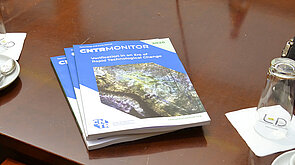
The third issue of the CNTR Monitor, focusing on the theme “Verification in an Era of Rapid Technological Change,” was published on November 3, 2026. Based on the observation that rapid technological developments could significantly reshape the verification landscape of the future, the publication identifies opportunities to harness new technologies for peace and security. It focuses on the questions of where targeted support for technologies makes sense, how these technologies must be designed for verification contexts, and where potential lies for future international negotiations. In line with PRIF’s knowledge transfer strategy, a series of discussion meetings with stakeholders from politics, academia, professional practice, and civil society took place in conjunction with the launch of the publication.
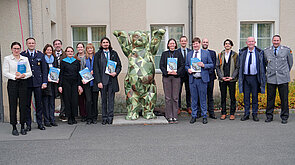
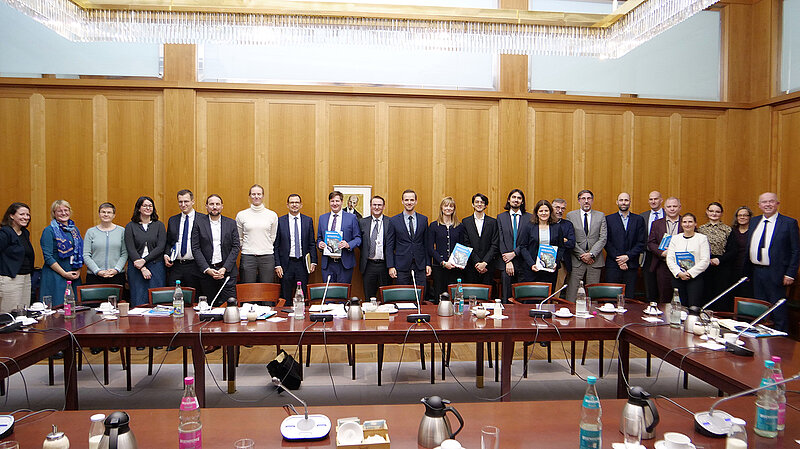
The kick-off took place on November 3 with the presentation of the new edition at the Federal Foreign Office, which had made the establishment of the cluster possible through initial funding and will continue to support it through 2027. The researchers presented the report’s key findings and recommendations. Following the presentation, the potential and challenges were discussed with the department representatives, division heads, and staff members in attendance. In addition to the thematic impulses, the discussion also highlighted the importance of exchange between research and diplomacy.
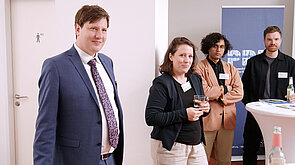
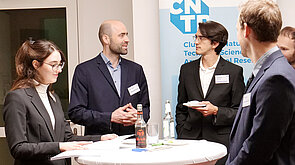
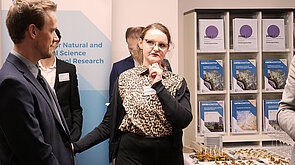
Afterward, PRIF’s Berlin office hosted an informal gathering with guests from politics, research, and civil society. The event provided an opportunity to discuss the topics covered in the CNTR Monitor and to identify opportunities for future networking and exchange.
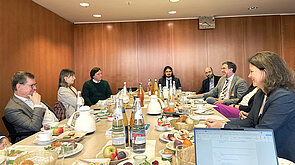
The following day, CNTR hosted a parliamentary breakfast in collaboration with the office of Dr. Ralf Stegner, Member of the German Bundestag and Chair of the Subcommittee on Arms Control, Proliferation Control, Nonproliferation, and International Disarmament. CNTR researchers discussed several highlights from the CNTR Monitor with the attending members of parliament and parliamentary staff, including questions such as: How should research funding mechanisms be designed to promote the development of verification technologies? How can the opportunities offered by technologies such as artificial intelligence be harnessed without neglecting the significant dual-use risks?
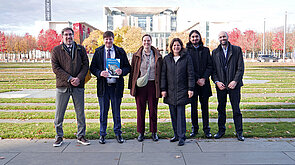
In a meeting with Division Pol I 5 of the Federal Ministry of Defense on the afternoon of November 4, CNTR researchers discussed selected topics from the new Monitor. A key focus was on arms control in the field of space technologies and the prevention of an arms race in space. Furthermore, the use of innovative technologies such as quantum sensors and artificial intelligence for verification tasks was examined, and the potential and limitations of genetic engineering attribution were presented.
Finally, the team presented the CNTR Monitor on November 5, 2026, during a virtual book launch. In a discussion with international experts on arms control, disarmament, and nonproliferation, the team highlighted the opportunities offered by new technologies while also addressing potential challenges—such as barriers to access for countries in the Global South—and strategies for overcoming them.
The CNTR project team would like to thank all discussion partners from the past few days for their interest and the productive exchange.
The CNTR Monitor 2026, “Verification in an Era of Rapid Technological Change,” is an open-access publication. It can be read and downloaded at monitor.cntrarmscontrol.org.